Table of Contents
Agentic Design Patterns
Building Intelligent Workflows with Agentic Patterns we explore Agent Builder basics, File Search, Connectors, MCP
AI agents and other modern AI systems can think, plan, and act on their own to solve difficult problems. Agentic Design Patterns make this possible. They are a structured to explain how AI agents work, making decisions, and interacting with people and tools. To make advanced, dependable AI systems, you need to know how these patterns work.
What Are Agentic Design Patterns?
Agentic design patterns are sets of rules that tells the AI agents how to solve the problems (Issues). Agentic AI agents are different from the old AI models because they show agency instead of just answering the questions. This means that they can do things on their own, remember things from one interaction to the next, use outside tools well, plan multi steps processes, and even think about their own work to make things better.
Some important features of agentic AI are:
Agency: The capacity to choose an independent course of action and act on it.
Memory: Remembering the context of tasks or conversations and wondering what you should have done.
Tool Usage: Applying applications, APIs or data sets that do not belong to the Web of Data for a certain task.
Planning: Dissecting complex tasks into actionable steps.
Reflection: They were reviewing and improving their work to continue getting good outcomes.
Why Agentic-Native Platforms Matter
Platforms like Agent Builder are designed specifically for creating agentic workflows. Unlike standard AI feature builders, they are agentic native, meaning that they are built to support agents that can think, plan, act, and improve autonomously. This distinction allows developers to construct more sophisticated AI systems using structured patterns that optimize problem solving.
The Four Core Agentic Design Patterns
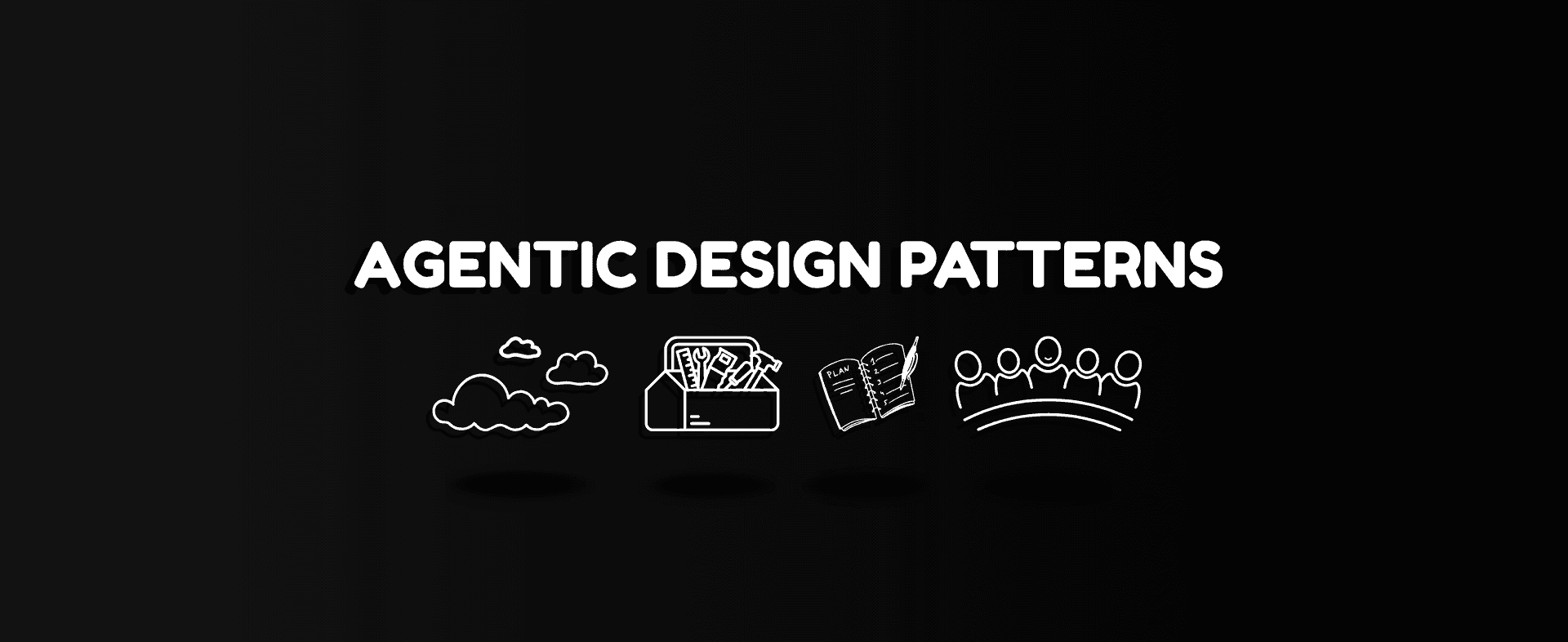
Agentic design relies on four primary patterns, each addressing a different aspect of agent functionality. These patterns can also be combined to handle highly complex tasks.
1. Reflection Pattern
Reflection enables agents to evaluate their own work. Similar to a built a quality control process, this pattern ensures that responses or actions that agent do meet high standards before being delivered.
Process: The agent drafts a response or action.
A critic mechanism evaluates the draft: Is it accurate, complete, and appropriate?
If the draft meets standards, it is finalized.
If improvements are needed, create an improver agent that revises the draft.
This pattern is very helpful in tasks like content generation, customer support, or any situation where the quality and accuracy are critical.
2. Tool Use Pattern
Tool Use allows an agent to intelligently select and utilize external tools based on task requirements. Instead of relying on a fixed process, the agent assesses what it needs and chooses the right tools to gather information or perform actions.
Process: User submits a request.
Agent analyzes the task and determines the necessary tools.
Selected tools are used to collect and process information.
The agent synthesizes results into a final response or action.
This pattern is commonly applied in personal assistant AI systems or data-driven decision-making tools.
3. Planning Pattern
Planning separates the strategic thinking from execution. One agent can creates a detailed plan by breaking down a complex task into smaller sub tasks, manageable steps, while another agent executes the plan simply.
Process: Planner agent receives a complex request.
Planner agent designs a step-by-step approach.
Executor agent always follows the plan, completing every step in order.
This pattern is particularly effective for multi step workflows like research report generation, project management, or automated analysis tasks.
4. Multi-Agent Pattern
Multi-agent systems consist of cooperative action among multiple specialised agents. Each agent is good at something, and requests are mapped to the best fitting one.
Process: A router agent processes the request and directs it to the correct specialist.
Whoever the specialist agent is, they do the job with their tools and technique.
Complicated matters are referred to human supervisions if necessary.
This method has a practical application in domains that demand professionals to have domain expertise such as health, finance and high-end technical support.
Combining Patterns for Complex Workflows
In production-level systems, these patterns often work together:
Reflection + Tool Use: Agents select tools, gather information, and then reflect on the output for quality.
Planning + Tool Use: Agents plan multi-step tasks, using the right tools at each step.
Multi-Agent + Reflection: Specialist agents execute tasks and review their work before final delivery.
Using these combinations enables robust AI systems capable of handling sophisticated, high-stakes processes.
Join the discusstion
No comments yet.